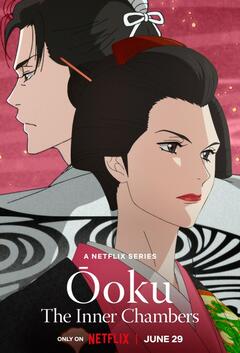
I really enjoy a good rear palace based period drama. I was first introduced to it with The Legend of Zhen Huan and was captivated by all the power politics and scheming, even if the endings were often tragic. So when I came across Ooku, I was immediately intrigued. The show is about the inner chambers (the rear palace equivalent) of the Shogun. Additionally, it is also set in an alt-history version of the Japanese shogunate where a plague has decimated the male population in Japan, leading to women taking over traditional male roles from the shogun all the way down to regular labourers.
An interesting premise though I mostly just expected a gender swapped version of typical palace harem drama. However, the series subverted my expectations by focusing on how the actual political situation evolved as Japan reeled from the effects of the plague. While ostensibly set in the Ooku, with most of the main characters tied to it, the show uses that setting to trace the rise of the female shogunate line. <<Spoilers >> Initially it starts off as a ruse to maintain stability when the shogun, Iemitsu, unexpectedly dies without an heir. His daughter, Chie, is forced to dress up as a man and pretend to be him while simultaneously having little real power and being saddled with the expectation of quickly birthing the next male heir to continue the line. The arrival of former priest, Arikoto, acts as a catalyst to change this as Chie and Arikoto fall in love. His gentle nature helps soften her hard edges which in turn allows her natural intelligence to shine through and eventually builds her confidence to be able to take power as herself when the situation allows it.
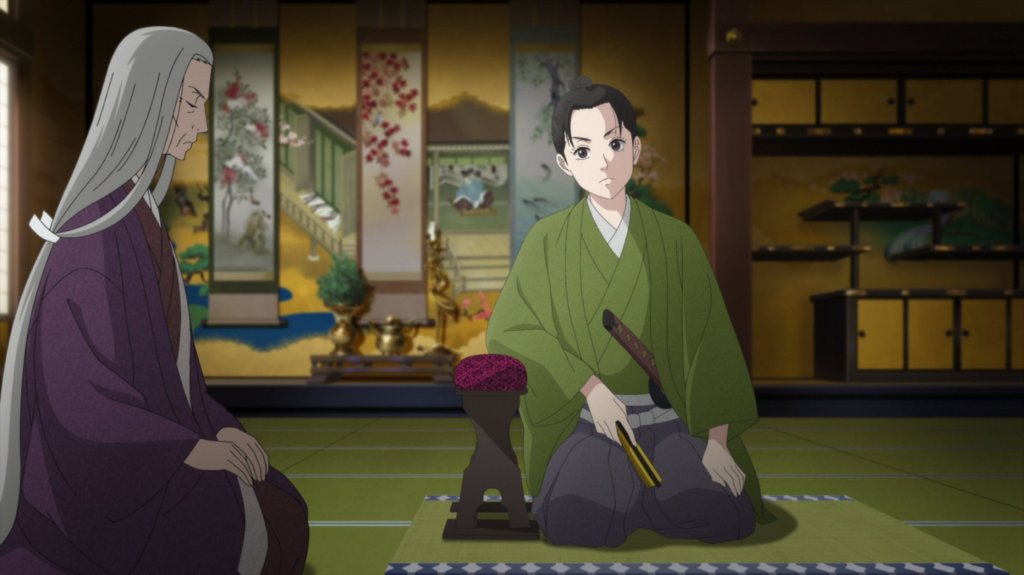
In parallel we get glimpses of how society outside the palace evolves. Since the plague only affects young men (with few exceptions), the surviving male population slowly starts getting treated like precious commodities, pampered and kept indoors with the sole expectation of fathering children (often at a price). Meanwhile with no men to carry the workload, women gradually take over in all fields, first as a survival strategy and eventually as a matter of course. One thing I really liked about the show was how it showed this progression as a very logical series of steps which made sense given the situation. Change was forced but still did not happen overnight. I also found it interesting that traditional gender roles did not merely get swapped. Women merely adapted to take on the broader workload both inside and outside the home which is perhaps a bit of a sad commentary on the thankless role women often play. I had initially assumed that with traditional roles reversed, men would be the ones struggling with inequality and power imbalances. But due to the scarcity of men, power (at least in some aspects) still remained in their hands.
Of course there are some suggestions of power plays within the Ooku but the remain on the periphery. The focus firmly stays on the individual characters and how they deal with the various trials thrown at them. It was an engaging watch and I went through the season pretty quickly. The manga the anime is based on charts the societal changes over several generations of shoguns and cleverly works in real life historical events and inspirations in the alt-history setting (for instance the season shows Japan entering it’s isolationist era but resets it in the context of the plot to hide both the death of the shogun and the plague so that other nations don’t realize the precarious state of affairs within Japan). And I think that would have been fascinating to watch over a multi-season arc. However, it doesn’t appear the show is getting a second season so we might have to be satisfied with leaving the show at the cusp of the new female-dominated era.
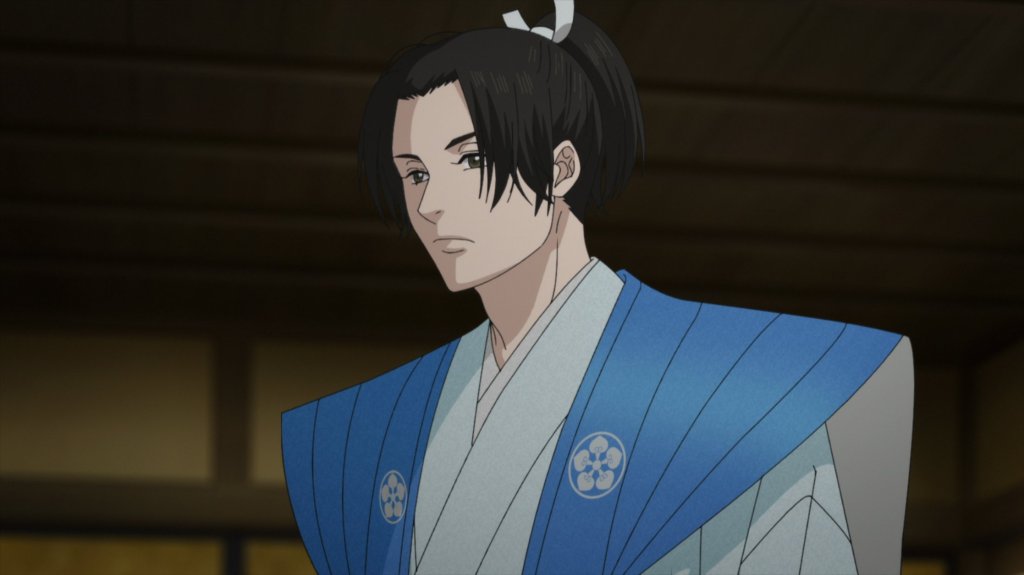
A word of warning though – if you are not a fan of tragedy then don’t start this show. The main characters go through so much pain with so little payoff that at a certain point it feels like torturing them just for the sake of it. It’s perhaps more realistic but when watching a show I a bit more balance between the joyful and the dismal. Another quibble I had was that the central relationship between Arikoto and Chie felt a tad underwhelming as the show progressed. The initial phase was actually well developed showing Arikoto finding new meaning in bringing solace to this damaged soul after being forcibly wrenched away from his calling as a priest. I can also see how someone like Chie, who has been forced into a role from an early age and has experienced little real affection, could finally start opening up to someone like Arikoto. However after the time skip, it felt like some crucial steps in their relationship were missing. Somehow it transitioned into Arikoto being completely besotted by her to the extent that he goes along with whatever she says, no matter how cruel or unreasonable. Yes, she’s shown to be in love with him as well but that just makes it all the more baffling that he doesn’t even attempt to be a voice of reason for her. For someone who was ready to devote his life to helping the less fortunate, his love seems to have destroyed that entire side of his sensibilities.
I have to also call out the structure of the episodes. The creators made an odd choice to start off the season with a feature length episode set several generations after Chie’s time. Ostensibly it’s a narrative device to frame the rest of the season as it shows the latest shogun searching for answers on how the archaic practices she wants to dismantle came about (hence the historical focus for the remaining episodes). But it fails to have the desired impact in two ways. First, it spends so much time making us care about a cast of characters and follow their journey through the episode only to pull the rug out from under us from episode 2 when it becomes clear that those characters are irrelevant to the rest of the season. It’s a shame as well since episode 1 is a compelling plot in its own right (and with one of the happier resolutions on the show). It would have been much better served to have a 10-15min intro focused on the latest shogun and then journeying back to Chie’s story while keeping the rest of it as a standalone side story released after the main season. Secondly, after episode 1, we never come back to the new shogun, not even a quick check-in shot at the end of the season. They may have envisaged a second season to continue the story, but it made the ending feel slightly jarring.
Final Thoughts: A good watch especially for alt-history fans. Be prepared that it is less palace intrigue, and more socio-political drama but it does a good job with the latter. I’d recommend it, but perhaps in smaller doses to temper the effect of all the tragedies that befall almost every character.


Leave a Reply